
It feels cliche to say that eating disorder recovery isn’t linear… but it’s so true.
Recovery from your eating disorder will likely be anything but linear.
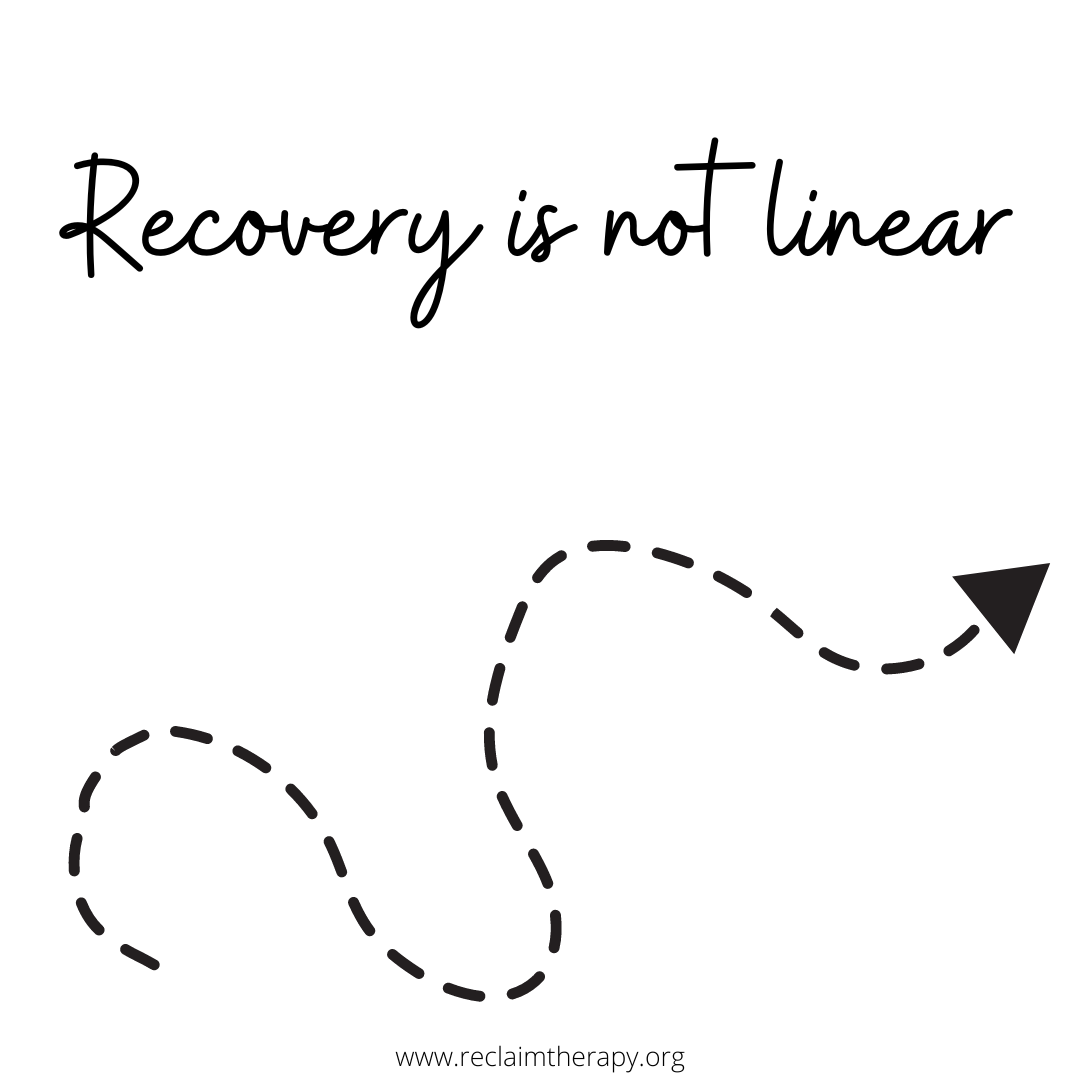
At times you probably feel like things are going ok, that things are feeling a bit lighter, less urgent, and a little less impulsive to dive headfirst into eating disorder urges.
And other days it probably feels like you’re at the bottom of an epically steep mountain that is recovery.
Relapses in eating disorder recovery happen. Relapse is a normal part of the recovery journey and is often considered part of the recovery process. It is common to experience setbacks, and these moments are an expected phase as you work toward healing.
And, they can be opportunities to grow in your recovery process.
What is an eating disorder relapse?
A relapse is an episode or a period of time that someone returns to eating disorder behaviors, body checking, obsession with body, weight and/or food.
Research has shown that 36% of women struggling with anorexia and 35% of women struggling with bulimia will relapse throughout the recovery process. Because there is often a significant amount of shame surrounding relapse, the actual percentages are likely higher due to underreporting.
Recognizing the warning signs in the early stages of relapse is crucial, as subtle changes in behavior or mood can indicate a potential setback. Monitoring for the re-emergence of disorder symptoms and eating disorder symptoms can help identify when someone may be at risk for relapse. Understanding and addressing risk factors, such as stress, social pressures, or unresolved emotional issues, can also play a significant role in preventing relapse and supporting ongoing recovery.
Body image and self-esteem in the context of relapse
Body image and self-esteem are deeply intertwined with the risk of eating disorder relapse. For many individuals recovering from eating disorders, negative body image and low self-esteem can be persistent challenges that make the recovery process more complex.
When someone is dissatisfied with their body shape or struggles with self-criticism, it can become easier to slip back into disordered eating behaviors as a way to cope or regain a sense of control. These underlying issues often need to be addressed directly in eating disorder treatment to prevent relapse and support long-term healing.
Focusing on improving body image and building self-esteem is not just about feeling better—it’s a crucial part of disorder recovery and relapse prevention.
How struggles with body image and self-worth can fuel relapse cycles.
Struggles with body image and self-worth can create a powerful cycle that fuels eating disorder relapse. When negative thoughts about body shape or weight take hold, they can lead to disordered eating behaviors like restrictive eating, bingeing, or excessive exercise. Low self-esteem often amplifies these behaviors, as individuals may turn to disordered eating in an attempt to manage emotional pain or feelings of inadequacy.
The pressure to meet unrealistic beauty standards, reinforced by society and media, can intensify body dissatisfaction and self-criticism, making it even harder to break free from old patterns. According to the National Eating Disorders Association, negative body image is one of the most significant predictors of eating disorder relapse, highlighting the importance of addressing these issues to reduce the risk of relapse and support lasting recovery.
Strategies for nurturing a healthier relationship with your body during recovery.
Building a healthier relationship with your body is a vital part of eating disorder recovery and can help prevent relapse. Practicing self-compassion is a powerful tool—treating yourself with kindness, especially during difficult moments, can counteract the harsh self-criticism that often accompanies eating disorders.
Engaging in self-care activities, such as gentle movement, meditation, or spending time in nature, can help reconnect you with your body in a positive way. Challenging negative self-talk is another important strategy: notice when critical thoughts arise and try to reframe them with more balanced, realistic affirmations. Focusing on what your body can do, rather than how it looks, can also shift your perspective and foster greater appreciation for your body’s strengths.
Seeking support from a mental health professional, such as a therapist experienced in eating disorder treatment, can provide guidance and encouragement as you work toward body acceptance. The National Eating Disorders Collaboration emphasizes that nurturing body positivity and self-acceptance is essential for disorder recovery and relapse prevention, helping you stay on track in your recovery journey.
How do you navigate relapses in eating disorder recovery?
Get honest with your eating disorder treatment team.
It can be hard to be completely forthcoming with your treatment team, especially if you’re feeling some shame about returning to old behaviors. Here at Reclaim, we want you to know that there is nothing wrong with you returning to old ways of coping. You are not wrong, bad, or a failure.
We work hard to build relationships with our clients that are strong enough for honesty. Our job is to support you exactly where you are, whether that’s knee-deep in your eating disorder or navigating the world post-eating disorder.
Having a strong support system is essential during recovery, as it can help you manage setbacks and sustain progress. Involving a family member or loved one in your recovery process can provide additional encouragement and emotional support. If you are struggling to manage on your own, do not hesitate to seek professional help from specialists who understand eating disorders. If you have stopped working with a treatment team, now is a great time to reach out to your old team, or find a new team that can support you through this time.
Get curious about what might have triggered you.

The world that we live in is inherently triggering when it comes to food and body stuff. People who are navigating recovery from eating disorders are some of the strongest, most resilient people we know. And, being faced day in and day out with a culture obsessed with food rules, thinness, and dieting can be wearing.
Everyone’s triggers are going to be different. Relapse triggers, or eating disorder relapse triggers, can include specific situations such as stress, life transitions, poor body image, or psychosocial challenges that lead to a return to disordered eating. For example, a stressful event like a breakup or starting a new job can act as a powerful trigger. Some people get lured back to eating disorder thoughts and behaviors when they’re exposed to people in their lives dieting and losing weight. Some people return to eating disorder behaviors when they experience emotional upheaval or relationship changes. Other people return to eating disorder behaviors because it feels like the safest option to do so when so many things in life feel unsafe. Disordered thoughts and disordered behaviors are common responses to these triggers and can jeopardize recovery progress.
Regardless of what it is, being curious about what triggered you to return is important. With that information, you can begin to work with your treatment team on moving your way back to a steadier footing.
Get compassionate with yourself.
You’re a human. You’re not bad, wrong, a failure, or doing recovery wrong. Recognizing and affirming the pain and suffering that brought you back to your eating disorder will go a long way.
Remember to maintain hope during your recovery, even if you experience setbacks along the way.
Get as much support as you can.
On top of working with your therapist and dietitian, groups are a wonderful way of connecting with other people who are experiencing similar struggles. Loved ones, such as friends and family, can also provide crucial emotional support during recovery, helping you feel understood and less isolated. There are multiple organizations that offer free support groups and meal support for people navigating eating disorder recovery that can be beneficial to add to your support network. Participating in a relapse prevention program is also highly recommended, as it offers strategies to manage triggers and maintain your progress as part of ongoing support.
Prioritize your recovery
Recovering from an eating disorder can feel like a fight to reclaim your life. To reclaim you from the depths of obsession with food and body. If you’re here we’re sure you know that your eating disorder does a pretty great job of convincing you that recovery doesn’t need to be prioritized. But that healthiest, most centered Self that has fought so hard, to reclaim so much, is deserving recovery being the priority.
After completing treatment, it is especially important to prioritize your recovery, as this period can come with new challenges and potential triggers. Developing and following a personalized relapse prevention plan with professional support can help you manage risks and maintain your progress. If you experience a setback, remember that it is possible to get back on track by seeking timely support and re-engaging with your recovery strategies.
Understand that the very action of returning to recovery, is eating disorder recovery.
Here at Reclaim, we see recovery as the decision to come back. To come back to your values, to come back to your body, to come back to your hunger(s) and what you are most certainly deserving of.
The period after returning to recovery is often a vulnerable time, when individuals are at increased risk of relapse and need extra support. It is important to maintain healthy eating patterns during this phase, as disruptions can signal potential setbacks. Relapse can negatively impact physical health, making it crucial to address both emotional and bodily well-being.
The urge to lose weight may resurface, but it is important to recognize this as a risk factor for relapse. Co-occurring issues such as substance abuse can also increase vulnerability during recovery. Early intervention and recovery at a younger age are associated with better long-term outcomes, as younger patients tend to have lower relapse rates compared to adults.

Recovery doesn’t mean having it all figured out and never having another eating disorder thought or urge. Instead, recovery is turning toward yourself and your deepest needs and desires whenever you can.
If you’re struggling with a relapse, remember… there is always healing in the return.
🧡,

Reclaim Therapy is a specialized trauma and eating disorder therapy practice in Pennsylvania that helps women through binge eating relapses.
We provide in person and online therapy for eating disorders, trauma and body image concerns. We provide one on one counseling and group support for people who live in Pennsylvania who are struggling with anorexia, bulimia, binge eating disorder, orthorexia and compulsive exercise. We also specialize in treating PTSD and CPTSD (complex trauma). Click the button below to set up an appointment with a caring therapist today!