
So, you've been reading about EMDR.
Maybe your therapist brought it up, or you fell down a late-night Google rabbit hole trying to figure out why you can't just move on already. You're curious. Maybe also a little skeptical. And somewhere in your research, you keep seeing people mention how exhausted they feel after sessions.
If you're wondering why EMDR makes you tired, you're not alone. It's one of the most common things people ask before they commit to starting. If you look on tik-tok you’ll see hundreds of videos talking about it!
And, if you're already in treatment and feeling wiped out after every session, you're probably wondering if that's normal or if something is wrong.
It's normal.
And it's actually a sign that something meaningful is happening. Let's talk about why.
Introduction to EMDR Therapy
EMDR (Eye Movement Desensitization and Reprocessing) therapy is a transformative approach designed to help people heal from the lingering effects of traumatic events. Whether you’re dealing with post-traumatic stress disorder (PTSD), anxiety, depression, or other mental health challenges, EMDR therapy offers a structured way to process and integrate traumatic memories that may be holding you back.
During EMDR sessions, you’ll work closely with a trained EMDR therapist who guides you through the healing process. The therapy uses bilateral stimulation—such as eye movements, tapping, or sounds—to help your brain reprocess distressing experiences. This unique method, known as movement desensitization and reprocessing, taps into your brain’s natural ability to heal, allowing you to move forward from painful memories and reclaim your emotional well-being.
EMDR Therapy Session Structure
An EMDR therapy session is thoughtfully structured to support your healing every step of the way. It typically begins with a thorough assessment, where your EMDR therapist takes time to understand your mental health history, current symptoms, and the impact of traumatic memories on your life. Together, you’ll develop a personalized treatment plan, which often involves multiple sessions to address your unique needs.
Each therapy session follows a series of phases, starting with preparation and moving into the processing phase, where bilateral stimulation is used to help your brain reprocess traumatic memories. Techniques like mindful breathing exercises may be incorporated to keep you grounded and comfortable throughout the therapeutic process.
The final phase focuses on integration, helping you consolidate new insights and strengthen your emotional regulation skills. This structured approach ensures that each EMDR therapy session is both safe and effective, supporting your journey toward healing.
When You're Processing Traumatic Memories in EMDR, Your Brain is Doing Something Enormous
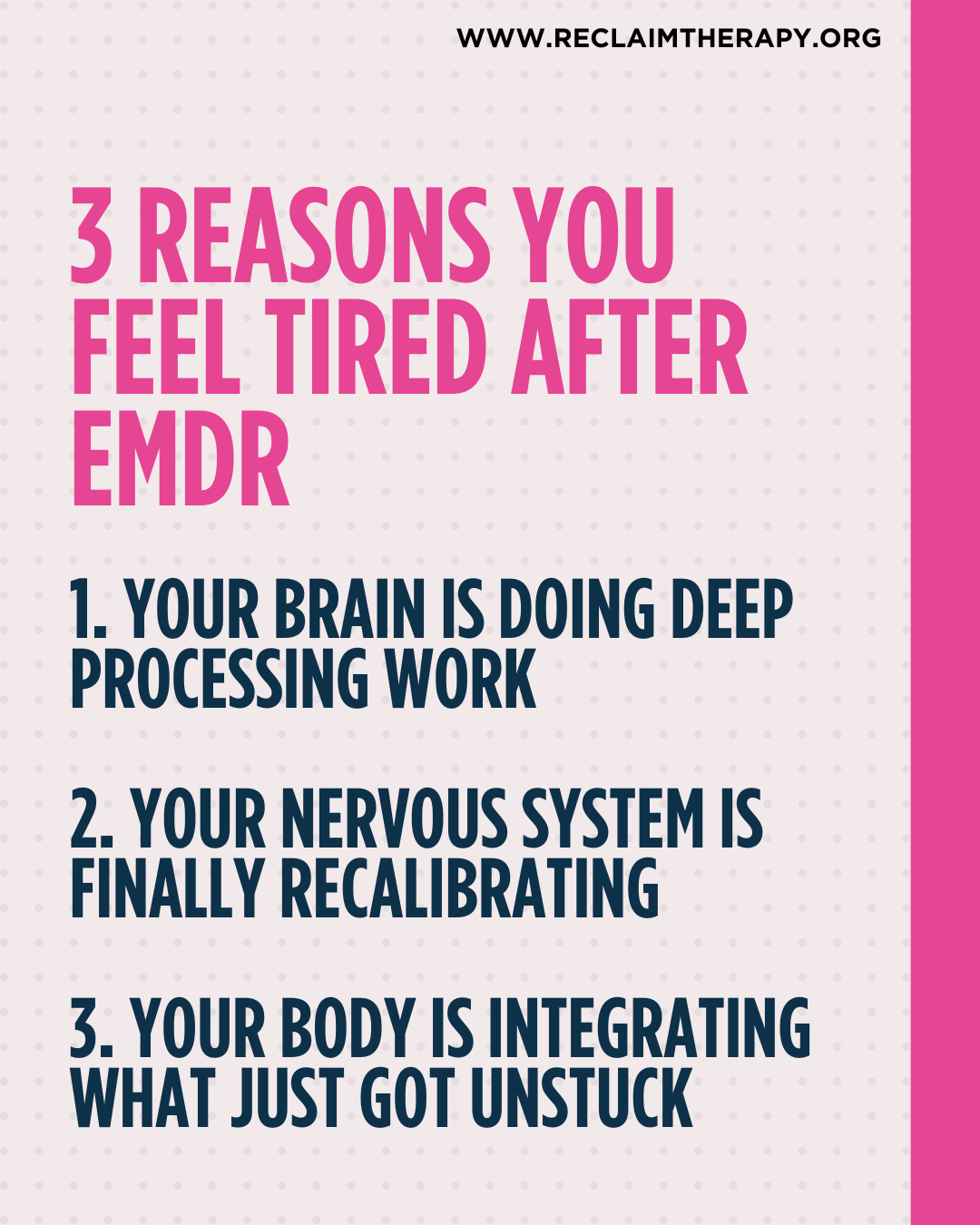
EMDR stands for Eye Movement Desensitization and Reprocessing. The name is a mouthful, but the process itself is pretty remarkable. During a session, your brain is doing something it was never able to do on its own, it’s taking traumatic memories that got stuck and actually processing them. EMDR processing is an active integration process where the brain is reprocessing memories and reorganizing neural pathways.
When something traumatic happens, especially when it happens repeatedly or during childhood, your nervous system doesn’t always get the chance to fully digest it. The memory gets stored in a fragmented, dysregulated state. That’s why trauma doesn’t necessarily feel like a regular memory, it can feel like it’s still happening.
EMDR uses bilateral stimulation (usually eye movements, tapping, or sound) to help your brain do something it couldn’t do on its own in the moment trauma happened… actually finish processing it. Your brain always had the capacity. It just got interrupted.
That process takes significant energy because EMDR requires deep mental and emotional work. Your brain is forming new neural pathways, integrating old information, and reprocessing memories as it reorganizes how it holds painful experiences. This integration process is central to the effectiveness of EMDR. Feeling tired after EMDR makes complete sense when you understand what your brain just did.
It's the Same Reason You Experience EMDR Therapy Fatigue After a Hard Therapy Session (But Honestly, Maybe Multiplied)
Most people know that a really heavy therapy session can leave you feeling drained. EMDR tends to amplify that. You’re not just talking about hard things. You’re accessing them at a deeper level, through the body and the nervous system, not just the thinking mind.
During EMDR, your brain moves through different emotional states pretty rapidly. You might feel grief, anger, fear, and relief all within the same session. These intense emotions and the emotional intensity of the process can trigger both physical and emotional responses. It's common to experience physical symptoms and physical reactions during or after EMDR, such as headaches, muscle tension, sleep disturbances, or other bodily sensations, as your nervous system processes and heals. Your body responds to all of it. It is also common to feel physically tired and experience physical fatigue as a result of the emotional intensity and intense emotions processed during EMDR. Your heart rate changes. Your breathing shifts. You might notice tension moving through your muscles or sensation in your chest.
That’s not a side effect. That’s the work. And after doing that work for 60 to 90 minutes, your system, your body, is ready to rest. EMDR therapy fatigue is a normal response, and many people feel tired after sessions due to the significant physical and emotional work involved.
The Tiredness Means Your Nervous System Is Doing Its Job
Here’s what I want you to really take in; feeling tired after EMDR is a sign of integration, not damage.
When trauma gets processed, your nervous system has to recalibrate. This nervous system recalibrating is part of the integration process and is essential for your healing journey, allowing your mind and body to fully process and settle after intense emotional work. It’s shifting from a state of chronic activation, where some part of you has been braced for danger, into something more settled. That shift is not always comfortable in the moment. Sometimes it feels like a slow exhale after holding your breath for a very long time.
That’s the tiredness. It’s your body finally getting the signal that it doesn’t have to work so hard anymore.
A lot of people also notice that they sleep more deeply after EMDR sessions, at least for a day or two. That’s your brain consolidating what it just processed. Sleep is actually when a huge amount of memory integration happens, so your body craving rest after an EMDR session is it doing exactly what it needs to do. Sleep disturbances, such as insomnia or restless dreams, can also occur for a few hours or days after a session as the nervous system completes its processing.
To support this integration process and help your nervous system complete its work, consider gentle self care strategies like rest, hydration, and quiet time as you move forward on your healing journey.
What to Expect and How to Take Care of Yourself
Knowing why it happens is helpful. Knowing how to handle it is even more helpful.
Most people feel the most tired in the 24 to 48 hours after a session. After that, many report feeling lighter, clearer, or less reactive to the things that used to send them into a spiral. The tiredness is temporary. The shift tends to stick. People may feel tired or experience physical and emotional symptoms as part of processing past traumas, distressing memories, or traumatic material during EMDR treatment.
A few things that help in that window after a session: give yourself permission to rest without guilt, stay hydrated (this sounds basic but your nervous system genuinely needs it), keep your schedule lighter if you can, and be gentle with yourself if emotions feel a little closer to the surface than usual. Grounding techniques can also be helpful tools for managing emotional and physical reactions after EMDR sessions.
Some people also notice vivid dreams, moments of unexpected sadness, or old memories surfacing in the days after a session. That’s normal too. Processing doesn’t always stop when you leave the office. If you notice significant impacts on your daily life or therapy plan, discuss them with your therapist, and avoid intense exercise immediately after sessions to support your recovery. EMDR treatment is a specialized trauma treatment, and working with mental health professionals ensures safety and effectiveness, especially for those with complex trauma or unresolved trauma.
The Role of the EMDR Therapist
Your EMDR therapist is your guide and ally throughout the EMDR therapy journey. They create a safe, supportive environment where you can explore and process traumatic memories at your own pace. EMDR therapists are specially trained in techniques like bilateral stimulation, which are essential for facilitating your brain’s natural healing process. They work with you to develop a treatment plan tailored to your needs, offering guidance and encouragement during each EMDR session.
Along the way, your therapist will help you navigate any physical sensations, emotional sensitivity, or vivid dreams that may arise, providing practical coping strategies and self care tips to manage these common reactions. With their expertise and compassionate support, you can move through the healing process with greater confidence and resilience.

So, Should the Tiredness Scare You Off?
Honestly, only you can answer that. It might depend on the season of life you’re in. But, I'll gently offer this: the things we avoid because they're hard are often exactly the things that would change our lives.
EMDR is not easy. It asks something very real of you. But the fatigue you feel afterward is not the kind that depletes you over time. It's more like the exhaustion after a long run or a really good cry. You feel spent, but somehow also more like yourself.
If you've been carrying trauma for a long time, your nervous system has been working overtime to manage it. EMDR gives it a chance to finally put some of that weight down.
To me, that's worth being tired for.
Reclaim Therapy is a trauma-focused group practice in Horsham, Pennsylvania. If you're curious about whether EMDR might be right for you, we'd love to talk.
🧡,

At Reclaim Therapy we are a team of EMDR Therapists who specialize in providing EMDR for CPTSD and EMDR for PTSD
Our team is passionate about helping trauma survivors reclaim their lives from the impact of trauma. If you’re looking for a trauma therapist who truly gets it, shows up as human and has an unwavering belief that you are deserving of healing, we’d be honored to support you!