
Therapy for Adult Children of Alcoholics
You’ve noticed a familiar, yet odd, sense of comfort in chaos.
And, looking back at your childhood, it makes a bit of sense why you feel this way.
From anticipating other people’s needs, caretaking family member’s emotions, working so hard to achieve and always waiting for the next shoe to drop… chaos just was.
A place you learned to operate from.

But, there’s a part of you that is ready to find peace.
A part of you that is tired of carrying the weight of all that responsibility.
Exhausted from feeling so afraid of anger, criticism and abandonment.
Hopeful that you can come home to yourself, break cycles of behavior and see what is possible outside of chaos.
Outside of feeling so anxious and afraid.
Outside of codependency and family dysfunction.
Common characteristics of adult children of alcoholics include:
Isolation and fear of people, especially authority figures
High achieving, overfunctioning and perfectionism.
Approval seeking and people pleasing
Following familial patterns by engaging in addictive behaviors or in relationships with people struggling with addictive behaviors.
Feeling a debilitating sense of responsibility for others.
Disconnecting from feelings.
Fear of abandonment.
A pull toward stimulation and chaotic situation, despite not enjoying them.
Harsh self-judgement and low self-esteem.
Codependency
(For the full list written by ACA, head here)

You may resonate with some, or all of these characteristics.
Each adult child of of an alcoholic or addict’s story and experience is unique. And, all children of alcoholics and addicts are deserving of support.
Know that you are not alone.
If you are struggling, there is hope for healing and plenty of support available through groups and individual therapy. Joining a support group, such as ACA meetings, can be especially helpful—these leaderless gatherings focus on ACA recovery, providing a safe space for adult children of alcoholics to share experiences and work through family dysfunction together. Al-Anon is another valuable resource for families affected by alcoholism, offering community and understanding.
Dysfunctional Family Dynamics: How Alcoholism Shapes Childhood and Adulthood
Growing up with a parent who struggled with alcoholism or addiction changes you. When your home environment is unpredictable and chaotic, you learn to survive by staying hypervigilant, reading every mood shift, anticipating needs before they're spoken.
Your own needs? They get buried. Because survival meant making yourself smaller, easier, less of a problem.
In families affected by substance abuse, emotional neglect is often part of the landscape. Whether it's physical absence, emotional unavailability, or inconsistency, children experience forms of abandonment that leave lasting impacts. These early experiences don't just disappear when you become an adult.
Many adult children of alcoholics struggle with relationships. Trust feels risky. Intimacy feels terrifying. You might find yourself confusing love with caretaking, or tying your worth to how well you can meet everyone else's needs while ignoring your own. This is codependency, and it's a common pattern for people who grew up in these environments.
The effects show up in other areas too. Authority figures might trigger anxiety or resentment. Setting boundaries feels impossible. You might have an overdeveloped sense of responsibility, constantly feeling like you need to fix things or rescue people. Or you find yourself drawn to partners who need saving, repeating familiar patterns from childhood.
There's actually a recognized set of traits common among adult children of alcoholics: approval-seeking behavior, fear of anger, difficulty with criticism, people-pleasing tendencies.
This cluster of struggles is sometimes called ACOA trauma syndrome, and it includes challenges with emotional regulation, self-worth, and forming secure intimate relationships. Cycles of guilt, fear, and self-doubt become the background noise of your life.
Healing is Possible
Working with a therapist who understands complex trauma and family systems can help you untangle these patterns.
Support groups like Adult Children of Alcoholics (ACA) provide community with others who get it without explanation. These spaces offer tools for understanding how your childhood still affects you and strategies for doing the inner work that leads to actual change.
Through therapy and support, you can learn to build healthier relationships, set boundaries that protect your wellbeing, and develop a sense of self-worth that isn't tied to how much you do for others. You can break the patterns of codependency and people-pleasing that have kept you stuck.
Recovery from childhood trauma isn't linear, and it's not easy. But with the right support, you can create a life that's not defined by what you survived. You can learn to honor your own needs, build relationships based on mutual respect rather than caretaking, and find stability that doesn't require constant hypervigilance.
If you grew up in a home affected by alcoholism or addiction, you don't have to keep carrying those patterns alone. Therapy can help you process what happened, understand how it shaped you, and create new ways of being in the world that actually feel safe.
Reclaim Therapy’s approach to Trauma Therapy for Adult Children of Alcoholics
Codependency therapy and counseling for adult children of alcoholics can help you heal from your childhood.
Our team of trauma therapists use a three-phased approach to treating complex trauma and treatment for codependency.
Develop a strong therapeutic relationship and build the groundwork for an experience that is safe and stable.
Process trauma at a pace and in a way that works for you and your individual needs (see more below).
Integrate what you’ve processed and re-processed into your everyday life so you can live more freely and authentically.
Types of Childhood Trauma Treatment at Reclaim Therapy
Our therapists are informed by current research in neuroscience, the adaptive information processing model and Polyvagal theory.
What that means is that we use a blend of the following modalities (but are not limited to these):
Internal Family Systems (Parts Work)
We are all made up of many different parts.
We work with all parts of you to better understand the ways in which they’ve developed heroic strategies in the past for survival, but may no longer serve you in the present.
We facilitate healing conversations between you and all of your parts to identify new ways of being in the world.
EMDR Therapy in Horsham, PA
EMDR helps to reprocess memories that have become “stuck” resulting in unconscious patterns that no longer serve us.
In reprocessing those earlier memories and integrating them more adaptively in the brain, we are better able to respond to environmental triggers with more ease.
Somatic Work and Mindfulness
Any kind of trauma, including being an ACA, impacts the nervous system and the body.
When we experience trauma, it’s often unsafe for us to be in our bodies.
Somatic work allows us to safely, in a modulated way, reconnect with our bodies and renegotiate traumatic experiences.
Education & Group Work
In addition to individual therapy, it can be incredibly supportive to get connected to 12-step groups that have allowed folks to get connected to others who ‘get it’, to have a space to tell your story to the extent that it is comfortable for you, and to learn more about your tendencies and patterns. Many people are drawn to these groups due to a felt need for connection, healing, and community. For example, Adult Children of Alcoholics (ACA) is supported by the ACA WSO (World Service Organization), which provides structure and resources for meetings and helps maintain the unique focus on healing from family dysfunction and inner child work.
For some, these spaces are incredibly healing and for others they aren’t a fit.
Break free from people pleasing, overfunctioning, caretaking and the hypervigilance that has kept you from living your most authentic life.
Get Started With Therapy for Adult Children of Alcoholics and Dysfunctional Families
step 1
Contact Reclaim Therapy for a free consultation call.
step 2
Meet with one of our Trauma Therapists!
step 3
Start your healing from your past. You and your therapist will build a foundation of safety and trust, moving into reprocessing your trauma as you’re ready.
WE’LL WORK TOGETHER
Online Therapy in Pennsylvania
At our virtual office

OR
In-Person
At our Horsham, PA Office

Our trauma specialists provide therapy for adult children of alcoholics and dysfunctional families!
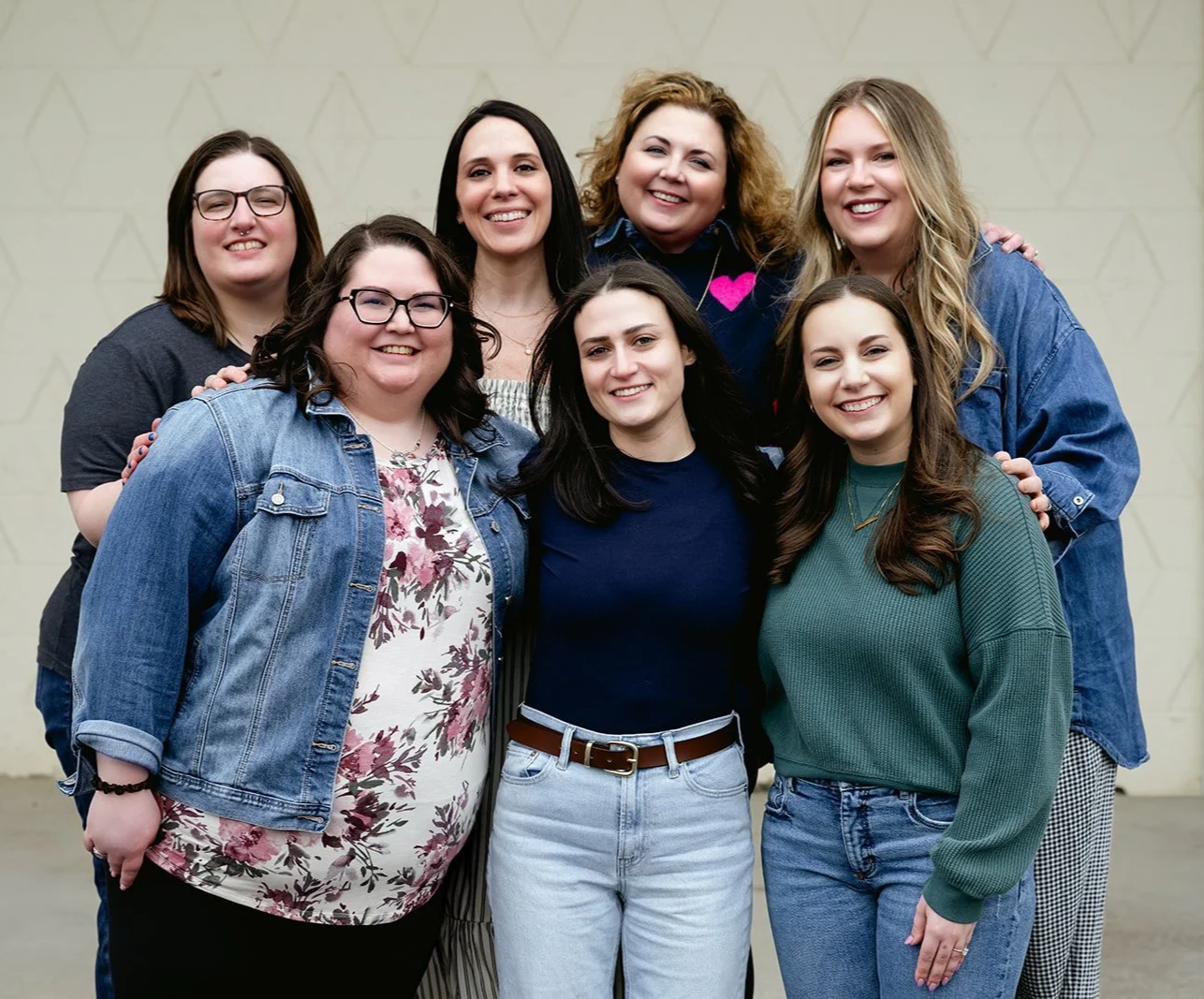
At Reclaim Therapy, we’re a team of trauma therapists who specialize in working with adult children of alcoholic parents.
We want you to know this first: the way your childhood still shows up in your adult life makes sense.
The legacy of ACOA trauma is real, and it lives in the nervous system, not a lack of willpower or insight.
What you learned growing up helped you survive.
The hypervigilance.
The over-responsibility.
The emotional shutdown or people-pleasing.
None of that happened because you failed.
It’s not your fault.
You were placed into roles you never consented to, and you deserve to step out of them.
You deserve support that actually understands what you lived through.
And you deserve relief from carrying this alone.
We’re here to help you do that. Gently, collaboratively, and at your pace.
Looking for a different type of support?
We also provide specialized trauma therapy, eating disorder therapy, EMDR therapy, binge eating therapy, grief counseling and body image therapy.
You matter. Your mental health matters. So very much.
We look forward to working with you soon!