
Hot take… the phrase "emotionally available" is so misunderstood.
People throw around “emotionally available” like it’s a checkbox on a dating profile or something you can will yourself into becoming if you just try hard enough.
And if you’ve ever felt like you want to be close to people but something inside you slams the door shut? That way of thinking about it doesn’t just miss the point, it can really reinforces shame.
Emotional availability isn’t about trying harder or being more vulnerable on command.
It’s about what your nervous system learned was safe.
And, if you grew up with CPTSD, emotional neglect, or relationships that felt unpredictable, your system learned something very different than many Instagram definitions suggest.
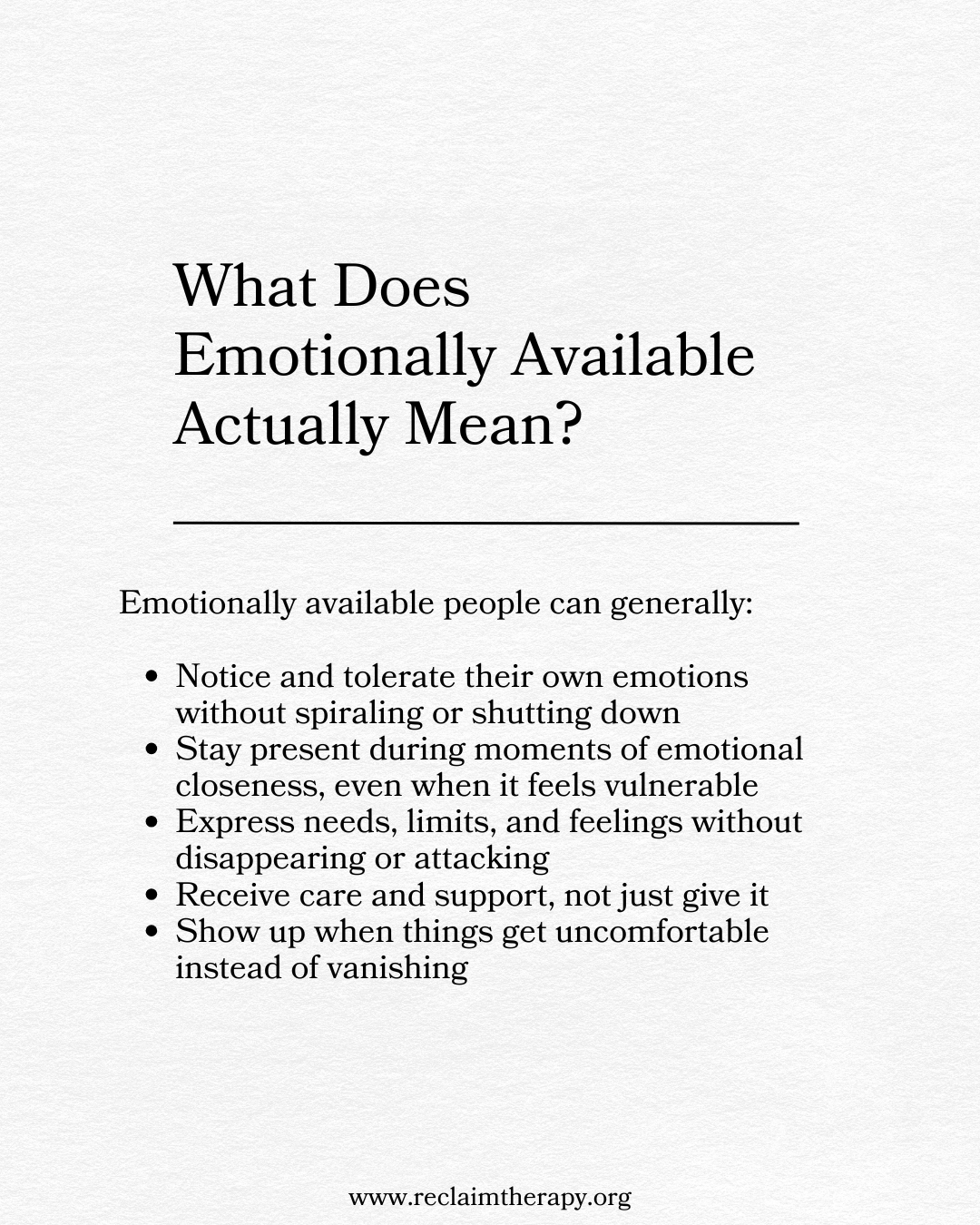
What Does Emotionally Available Actually Mean?
Let’s get super clear on what we’re even talking about here.
Emotional availability means being open, present, and responsive to your own and others’ emotions. It’s the foundation for trust, intimacy, and healthy relationships, built through compassion, understanding, and emotional self-awareness.
An emotionally available person can generally:
Notice and tolerate their own emotions without spiraling or shutting down
Stay present during moments of emotional closeness, even when it feels vulnerable
Express needs, limits, and feelings without disappearing or attacking
Receive care and support, not just give it
Show up when things get uncomfortable instead of vanishing
Emotional unavailability often arises from past trauma or negative experiences. This is especially true if your nervous system learned to protect you by shutting down or avoiding closeness, which we’ll explore more throughout this article.
This isn’t a pass/fail checklist.
It’s a capacity that fluctuates depending on your nervous system state, your relationship history, and how safe you feel in the moment. Some days you’ll have more access to this than others, and that’s normal.
Emotionally Available vs Emotionally Unavailable… What's the Difference?
Emotional unavailability can look like a lot of things, and most of them make sense when you understand the context.
It might show up as:
Avoiding conversations that feel emotionally loaded
Intellectualizing your way out of feelings instead of actually feeling them
People-pleasing instead of being honest about what you need
Shutting down, going numb, or dissociating when someone gets too close
Feeling trapped or suffocated when someone needs emotional intimacy
Emotional walls can form due to past hurt and betrayal, making it difficult to trust and be open with new partners. An emotionally unavailable person may also focus primarily on their own needs and interests, sometimes finding their partner's needs overwhelming.
For trauma survivors, emotional unavailability isn’t laziness or avoidance. It’s typically protection. Your nervous system is doing exactly what it was trained to do, which is to keep you safe from the kind of closeness that once felt dangerous, dismissive, or overwhelming. Fear of vulnerability is common among those with emotional unavailability, leading to reluctance in expressing emotions. Emotional unavailability is often a protective mechanism that develops after past experiences, trauma, or fear of being judged or hurt.
Why Emotional Availability Is So Hard After Trauma
If you have CPTSD, your nervous system learned to associate emotional closeness with danger. Not because you’re overthinking it, but because at some point, being emotionally available was dangerous. Childhood experiences and past trauma, such as neglect or inconsistent parenting, are key factors in developing emotional unavailability.
Maybe sharing feelings led to rejection, punishment, or being told you were too much. Maybe the adults around you couldn’t handle their own emotions, let alone yours. Maybe closeness was inconsistent, so you learned that needing someone meant risking abandonment.
Emotional neglect teaches some very specific lessons:
Needs lead to rejection
Emotions overwhelm other people
Staying self-contained is safer than reaching out
Unresolved emotional issues, such as hidden grief, pain, regret, or anxiety, can make it hard to express emotions and often lead to isolation. Low self-esteem also plays a significant role in emotional unavailability, as individuals may not feel worthy of love. Emotional unavailability often arises from past trauma or negative experiences, leading to defense mechanisms that prevent intimacy.
The tricky part is that you can understand all of this intellectually and still freeze when someone gets close. Failed relationships can also contribute to emotional unavailability, reinforcing fears and defensive patterns. You can want intimacy desperately and feel your body say “absolutely not” the moment it shows up.
You’re not afraid of intimacy. Your body learned that intimacy was unpredictable. That it wasn’t safe.
When You Want Connection but Your Body Says "No"
This is one of the most confusing parts of healing from trauma. You long for closeness. You crave it. And then when someone actually offers it, your nervous system hits the panic button.
Maybe you feel “too much” when you try to share your feelings, so you pull back before anyone can see you fully. Maybe you go numb during emotionally intimate moments, like you’re watching yourself from a distance. Maybe you keep choosing an unavailable partner or emotionally unavailable partner because that distance feels more familiar than safety ever could.
An unavailable partner makes it emotionally costly for you to communicate or express your feelings, often leading to unfulfilling or needy dynamics. Emotionally unavailable individuals may also have a secret life or backup plan for when relationships fail, using it as a protective barrier against rejection and to keep a safe distance.
Or maybe you’ve noticed that you feel way more comfortable being the helper, the listener, the one who holds space, because receiving care feels vulnerable in a way that terrifies you.
Both parts of you make sense. The part that wants connection and the part that’s scared of it.
Emotional Availability Is a Nervous System Capacity, Not a Mindset
You can’t think your way into emotional availability, and you can’t force it through better communication skills alone. Stress and defense mechanisms can deplete your emotional energy, making emotional openness much more difficult.
Mental health issues, such as anxiety or depression, can also act as barriers to emotional availability and the ability to form healthy relationships. Neglecting your mental health can contribute to emotional unavailability, so prioritizing self-care and self-compassion is essential for recovery. During overwhelming moments, grounding techniques like deep breathing or mindfulness can help anchor you in the present and support your nervous system’s capacity for connection.
Emotional availability requires regulation.
When you’re outside your window of tolerance (dysregulated, hypervigilant, shut down), connection doesn’t feel like connection. It feels like a threat. And your nervous system does what it knows how to do: it protects you.
Shutdown, dissociation, overfunctioning, fawning? Those aren’t personal failures, they’re adaptive responses that kept you safe when you needed them.
This is where trauma therapy becomes different than talk therapy. You can process your childhood for years, but if your body still experiences closeness as dangerous, insight alone won’t shift the pattern. You need approaches that work with your nervous system (like EMDR Therapy and Somatic Therapy), not just your thoughts.
Deep breathing is a practical self-soothing technique that can help manage strong emotions and maintain emotional availability, especially during overwhelming situations. Practicing deep breathing, journaling, or pausing for a moment to tune into your body can support emotional regulation. Many find professional guidance essential for unlocking deep-seated emotional blocks.
Creating a Healthy Emotional Environment
Creating a healthy emotional environment is at the heart of building deeper connections and cultivating emotional availability in any relationship. When you or your partner are emotionally available, it becomes possible to share feelings honestly, express needs, and support each other’s growth—without fear of judgment or rejection. This kind of environment doesn’t just happen by accident; it’s something you create intentionally, with self-awareness and care.
Emotionally unavailable people often struggle with emotional expression and intimacy, which can leave both partners feeling disconnected or even downright depressing. If you’ve ever felt like your partner avoids emotional topics, seems distant, or struggles to form deep connections, you’re not alone. Emotional unavailability can be emotionally costly, leading to low self-esteem, anxiety, and a sense that your needs don’t matter. But the good news is, these patterns aren’t set in stone.
Cultivating emotional availability starts with recognizing your own emotional patterns and being honest about where you (or your partner) might be emotionally unavailable. Self-awareness is key—notice when you avoid emotional topics, shut down, or feel overwhelmed by your own or your partner’s feelings. Developing emotional skills like active listening, empathy, and self-compassion can help you stay present and engaged, even when things get uncomfortable.
Setting healthy boundaries is another essential part of creating a supportive emotional environment. Boundaries aren’t about shutting people out—they’re about making space for both your needs and your partner’s feelings to coexist. When you’re clear about your limits and communicate them openly, you create a sense of safety and trust that allows for deeper emotional intimacy.
If you notice avoidant attachment patterns—like pulling away when things get close, or feeling anxious about your partner’s affection—try to approach these feelings with curiosity rather than criticism. Recognizing emotional availability (or the lack of it) in yourself and others is the first step toward change. Remember, emotionally unavailable people aren’t broken; they’re often protecting themselves from emotional pain rooted in past experiences.
Signs You're Becoming More Emotionally Available (Even If It's Slow)
Progress doesn’t always look like calm, centered vulnerability. Sometimes it’s messier than that. As you progress, it's important to recognize emotional availability in yourself—notice when you are open, receptive, and willing to engage emotionally. Here are some signs that you’re actually shifting:
You notice your emotions sooner instead of realizing three days later that you were upset
You can stay present during discomfort without immediately needing to fix it, flee, or numb out
You name what you need without apologizing for it seventeen times first
You can tolerate repair after a rupture instead of assuming the relationship is over
You allow yourself to need support sometimes, even if it still feels uncomfortable
Assessing your own emotional availability is crucial—understanding your capacity to be open, present, and vulnerable helps you build trust and intimacy. When you actively cultivate emotional availability, you set the stage for personal and relational growth. Emotional availability transforms relationships by creating deeper connections and fostering emotional growth.
Becoming more emotionally available doesn’t mean you stop feeling protective of yourself. It means your nervous system is learning that closeness can be safe sometimes, with some people, in some contexts.
That’s not nothing.
How to Become Emotionally Available Without Forcing Vulnerability
This isn’t about pushing yourself to be more open or vulnerable faster. That usually just retraumatizes your system and makes it trust you less.
If you’re struggling with emotional unavailability, here’s some relationship advice and maybe some tips: focus on building emotional skills required for emotional depth, emotional connection, and genuine interest in your partner’s feelings and vulnerabilities. Take a hard look at the beliefs you have about yourself in your relationship, and remember that personal growth and addressing past relationships or past trauma are key to becoming emotionally open and emotionally invested. You deserve love, and creating a loving relationship requires both partners to make each other's feelings equal and prioritize each other's own needs to improve relationships and create happier, healthier relationships. Cultivating healthier connections means recognizing that a relationship requires interdependence, not just independence.
Instead, try these as invitations:
Start with safety before sharing. Notice what helps you feel more regulated, not just what sounds like “good therapy advice.” Sometimes that means taking space. Sometimes it means moving your body before a hard conversation.
Track what feels regulating vs overwhelming. Not all emotional closeness will feel the same. Some people, some topics, some contexts will feel safer than others. That’s data.
Practice receiving, not just giving. Let someone care for you in small ways. Notice what happens in your body when you do.
Work with your body, not against it. If you’re shut down, trying to force feelings won’t help. If you’re hyperaroused, jumping into vulnerability will overwhelm your system. Meet yourself where you are.
Choose relationships that allow pacing. You don’t owe anyone access on their timeline. The right people will let you move at the speed your nervous system needs.
Practice emotional vulnerability and expressing emotions honestly, including when you feel sad. Share your feelings openly and invite your partner to do the same, so both partner’s feelings and partner’s vulnerabilities are valued.
Develop the emotional skills required for emotional depth and emotional connection. Show genuine interest in your partner’s feelings, and strive to be an emotionally available lover by being emotionally invested and emotionally open.
Make both partners’ feelings equal and prioritize each other’s own needs. This helps improve relationships, create happier relationships, and leads to healthier relationships overall.
Cultivate healthier connections by recognizing that a relationship requires interdependence for a truly loving relationship. Mutual support and balanced reliance foster trust and intimacy.
Address anxious attachment and avoid avoidant behaviors like avoiding phone calls. Make time for your partner and be accessible to build trust and security.
Stop the secret life. Being honest and transparent fosters trust and emotional intimacy.
You don’t have to open faster to heal better. You just have to keep orienting toward what feels safer, bit by bit.
Emotional Availability in Relationships After Emotional Neglect
If you grew up with emotional neglect, emotionally available relationships can feel… weird. Maybe even boring at first. Emotional neglect can deeply impact adult relationships, making it difficult to connect and share feelings openly.
Because chaos can feel like chemistry. Inconsistency can feel like passion. And when someone shows up steadily, consistently, without drama, your nervous system might not know what to do with that. It might even feel suspicious.
This is why emotionally mature partners sometimes feel “off” or “too nice” early on. Your system is looking for the familiar patterns it learned in childhood. When those patterns aren’t there, it assumes something must be wrong.
You might find yourself:
Waiting for the other shoe to drop
Testing the relationship to see if they’ll leave
Feeling more anxious in secure relationships than chaotic ones
Misreading safety as boredom
Low self-esteem can also play a significant role in emotional unavailability, making it harder to trust and accept your partner's affection. Building trust and connection in adult relationships often requires emotional touching—deep emotional intimacy that goes beyond physical contact. This kind of vulnerability helps foster closeness and makes you feel worthy of your partner’s affection.
Old relational learning shows up in present relationships. Not because you’re ruining things, but because your body is trying to keep you safe using outdated maps.
This is where trauma-informed therapy can help. Not because you’re doing relationships wrong, but because your nervous system needs new experiences of closeness that don’t end in rejection, dismissal, or abandonment. That takes time, and it takes support.
Emotional Availability Is Something You Grow Into, Not Something You Owe

You’re not failing at relationships just because emotional availability feels hard.
You’re learning something your nervous system never got taught in the first place. That closeness can actually be safe. That your feelings get to matter. That needing someone doesn’t mean you disappear.
And that doesn’t happen by yourself.
It happens with people who can actually hold space for where you are. In therapy that gets how your body works. In relationships where you don’t have to perform a sort of readiness you don’t feel.
Opening up to your partner about your deepest fears and life's greatest disappointments can foster intimacy and trust, helping you grow into your own emotional availability.
You don’t owe anyone vulnerability. But, you do get to move toward emotional availability at whatever pace your system needs, with people who aren’t rushing you to get there.
🧡,

Looking for a trauma therapist in Horsham, PA?
Reclaim Therapy is a specialized EMDR Therapy and trauma therapy practice. We specialize in treating childhood trauma, complex trauma and eating disorders. We believe that all people are deserving of reclaiming their lives from the impact of trauma. If you’re looking for specialized trauma therapy, we’re so glad you found us.