
Bulimia rarely looks like what people expect it to.
There's no required weight for it to be real, no visible before and after, and no moment where you'd necessarily be able to tell just by looking. Someone can be holding down a job, showing up to dinner, laughing at the right times, and still be locked in a private cycle of bingeing, purging, and the shame that follows both.
It's one of the most hidden eating disorders there is, and that's exactly what makes it dangerous.
If you're here because something in you is worried, about yourself or about someone you love, trust that instinct. Bulimia survives and thrives on secrecy. The sooner it gets named, the more room there is to actually do something about it.
This post focuses specifically on bulimia. If you want the wider picture across eating disorders in general, we've covered that in our post, Eating Disorder Signs and Symptoms.
Here, we're going deeper into what shows up in behavior, in the body, and underneath it all emotionally.
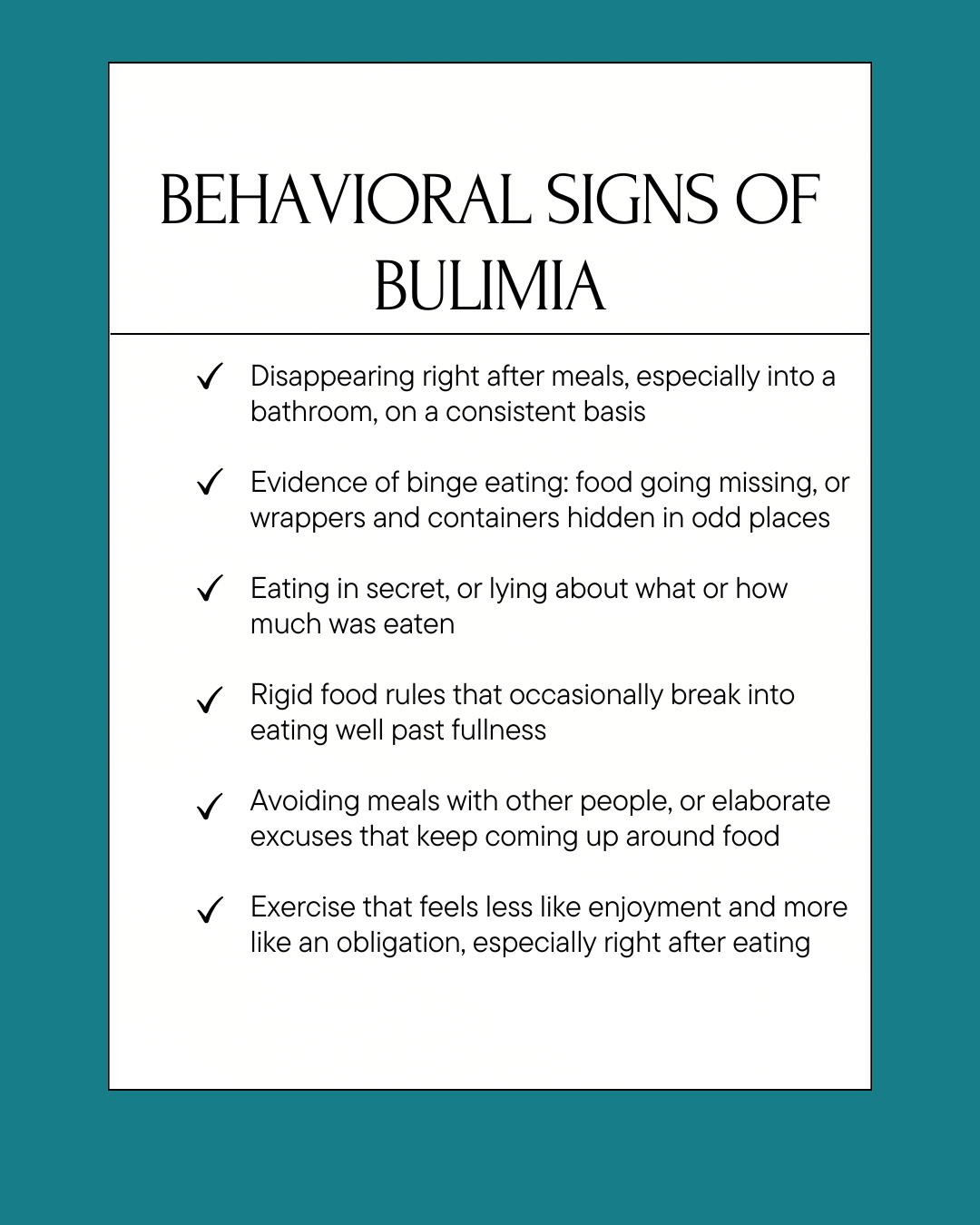
Behavioral Signs of Bulimia
Bingeing and purging cycles are often built for concealment, so the signs tend to be about pattern more than any single moment you happen to catch.
Disappearing right after meals, especially into a bathroom, on a consistent basis
Evidence of binge eating: food going missing, or wrappers and containers hidden in odd places
Eating in secret, or lying about what or how much was eaten
Rigid food rules that occasionally break into eating well past fullness
Avoiding meals with other people, or elaborate excuses that keep coming up around food
Exercise that feels less like enjoyment and more like an obligation, especially right after eating
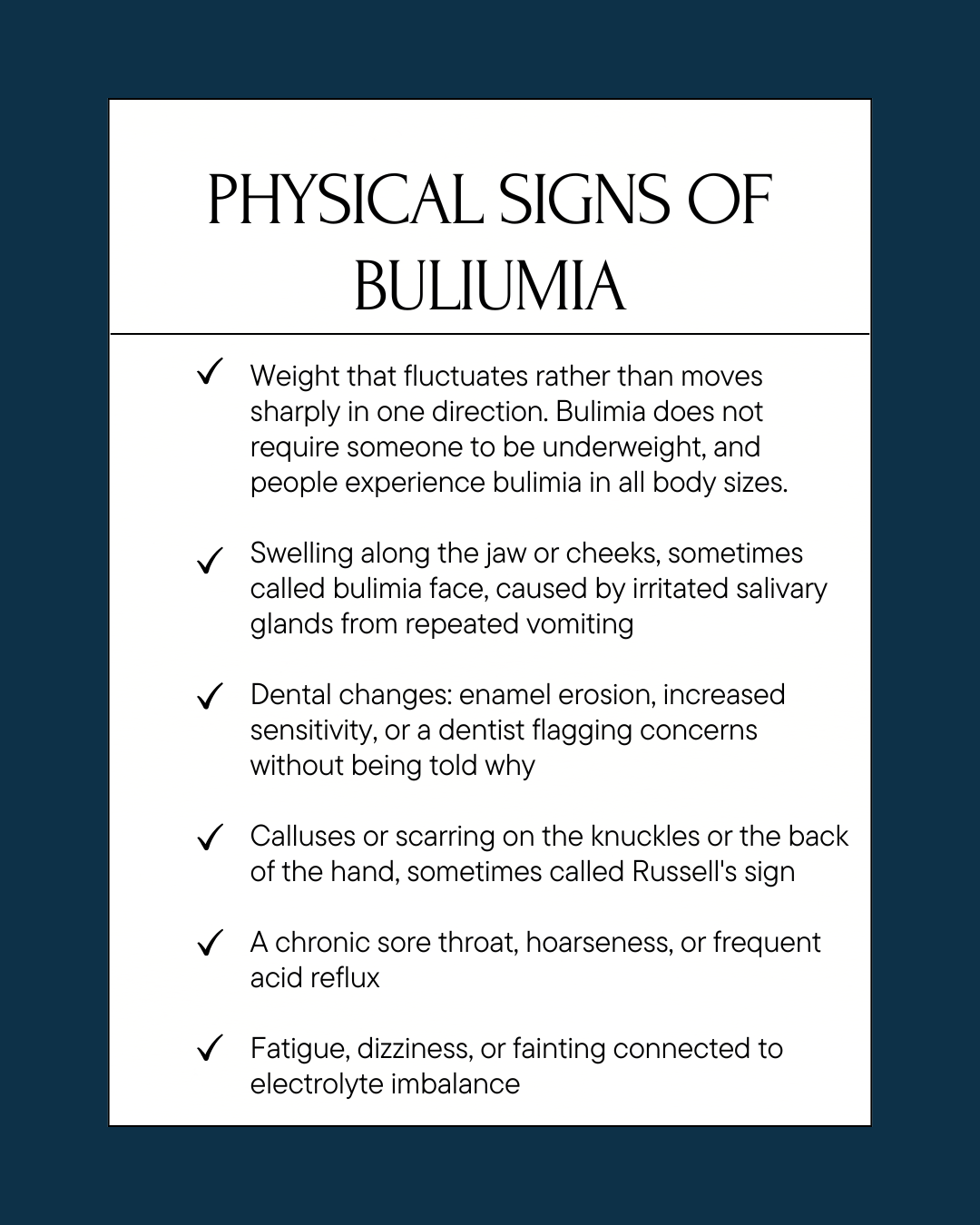
Physical Symptoms and Signs of Bulimia
These patterns are among the key warning signs and physical symptoms of bulimia nervosa, though similar eating disorder behaviors can also appear in other eating disorders.
Going to the bathroom immediately after meals on a consistent basis, a pattern that can point to self induced vomiting
Weight that fluctuates rather than moves sharply in one direction. Bulimia does not require someone to be underweight, and people experience bulimia in all body sizes.
Swelling along the jaw or cheeks, sometimes called bulimia face, caused by irritated salivary glands from repeated vomiting
Dental changes: enamel erosion from repeated exposure to stomach acid, increased sensitivity, or a dentist flagging concerns without being told why
Calluses or scarring on the knuckles or the back of the hand, sometimes called Russell's sign, caused by repeated contact during purging
A chronic sore throat, hoarseness, or frequent acid reflux
Fatigue, dizziness, or fainting connected to electrolyte imbalance, which can become life threatening and lead to life threatening complications if left untreated
Women's health can also be affected, including menstrual changes and fertility concerns.
Emotional Signs of Bulimia
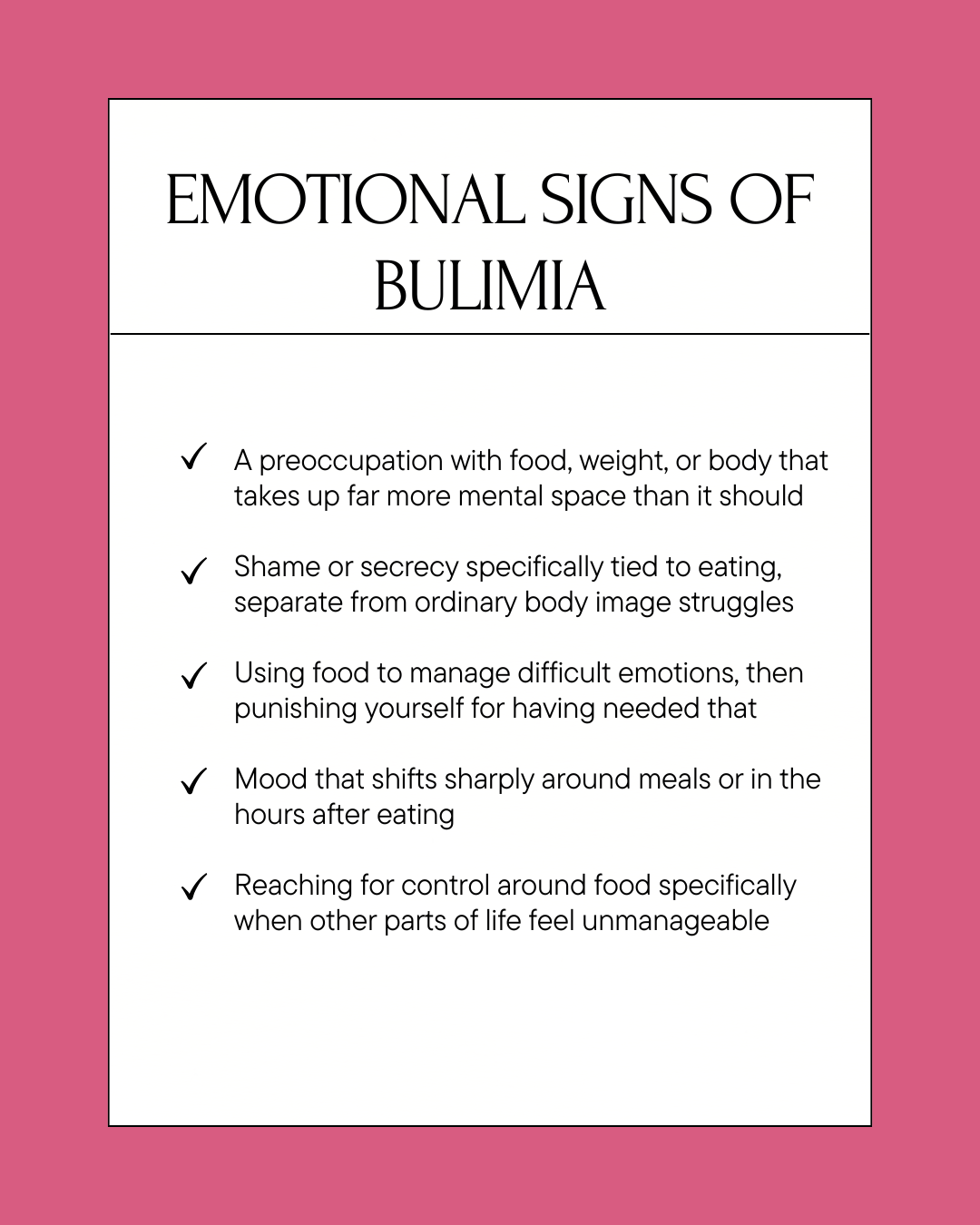
A preoccupation with food, weight, or body that takes up far more mental space than it should, often alongside a distorted body image
Shame or secrecy specifically tied to eating, separate from ordinary body image struggles
Using food to manage difficult emotions, then punishing yourself for having needed that, which can wear down emotional health
Mood that shifts sharply around meals or in the hours after eating
Reaching for control around food specifically when other parts of life feel unmanageable
Dental erosion, a common complication caused by repeated exposure to stomach acid during vomiting
Russell's sign, meaning calluses on the knuckles from repeated contact with the teeth during vomiting
Purging-related electrolyte imbalances that can lead to cardiac complications and become life threatening
If you're reading this and recognizing more of yourself than you expected to, you don't have to have it all figured out before it counts. Bulimia is one of several mental disorders, and it is also a serious mental illness, so support for your mental health matters. Do I Have an Eating Disorder? is a good next read while you sit with what's coming up.If you're reading this and recognizing more of yourself than you expected to, you don't have to have it all figured out before it counts. Do I Have an Eating Disorder? is a good next read while you sit with what's coming up.
If You Recognize This in Someone You Love
Noticing these signs in someone else puts you in a hard spot. You likely want to say something, and you're scared of saying the wrong thing.
A few things that tend to help: lead with your concern for their wellbeing, not their weight or appearance. Avoid commenting on their body at all, even if the comment feels like a compliment. Ask open questions instead of presenting evidence you've gathered. And know that this isn't something you can fix for them, but you can be the reason they finally tell someone.
We've written a full guide with more specific language for this exact moment: How to Support Someone With An Eating Disorder.
Bulimia Rarely Shows Up Alone
Bulimia tends to travel with company. Anxiety, depression, OCD, and a trauma history show up alongside it often enough that treating the eating disorder in isolation rarely gets to the root of it. We break down the most common overlaps in Comorbidities Associated with Eating Disorders.
This is where a trauma-informed lens matters. There is no single exact cause, and factors like family history and emotional health can shape risk. Bulimia is frequently not really about food. It's a nervous system that learned to manage overwhelming feelings through a behavior that offers control, numbness, or relief, even when that relief costs so much. If you're supporting a loved one, one practical step is helping them find a healthcare professional or healthcare provider with eating-disorder experience.

Reclaim Therapy provides therapy for eating disorders in Horsham, PA and virtually across Pennsylvania.
Finding Therapy for Builimia Nervosa near Horsham, Pennsylvania
Recognizing these signs is not an overreaction. It's the first real step.
At Reclaim Therapy, our approach to eating disorder treatment is trauma-informed and somatic, which means we're not just working with the behaviors around food. We're working with the nervous system underneath them. All of our clinicians are EMDR trained, and EMDR can be an extremely effective piece of eating disorder recovery when trauma is feeding the cycle. Learn more in Can EMDR Help with Eating Disorders? and Trauma-Informed Eating Disorder Treatment.
If any of this resonated, whether it's about you or someone you love, reaching out for a free consultation to get started with eating disorder treatment is a solid next move, not a last resort.
Our team of eating disorders clinicians works with clients across Montgomery County, Philadelphia, and Lower Bucks County, both in person in Horsham and virtually.
Schedule a free consultation to learn more about therapy for bulimia and disordered eating with our team at Reclaim Therapy.
🧡,

Frequently Asked Questions
What are the first signs of bulimia?
The earliest signs are often behavioral rather than physical, things like disappearing after meals, secrecy around food, or a bathroom trip that becomes a pattern right after eating. Physical signs like swelling or dental changes tend to show up later.
What does bulimia face look like?
Bulimia face refers to puffiness along the jaw and cheeks caused by swollen salivary glands, a common physical response to repeated vomiting. It can resemble general facial swelling and is one of the more visible physical signs, though it doesn't appear in everyone.
Can someone have bulimia without losing weight?
Yes. Bulimia does not require someone to be underweight, and most people with bulimia are in an average sized or larger body. Weight is one of the least reliable signs to look for.
Is bulimia dangerous even if the behaviors seem infrequent?
Yes. Bulimia carries serious medical risks, including electrolyte imbalances that can affect the heart, even when the behaviors aren't constant. Frequency doesn't determine how serious it is.
How is bulimia treated?
Effective treatment typically addresses both the behaviors and what's driving them, often including therapy with a mental health professional, nutritional counseling, and medical care or medical monitoring. Trauma-informed approaches, including EMDR, can be especially helpful when trauma is part of what's fueling the cycle. Support may also come from a healthcare provider and address both bulimia and related mental health concerns.