
Can Trauma Cause Digestive Problems? The Gut-Brain Connection
Maybe your stomach has always been the first place stress shows up.
You get anxious and suddenly you're nauseous. Your stomach knots up before a difficult conversation. Your appetite disappears when you're overwhelmed. Or your digestive system seems to have a mind of its own, especially during periods when life feels like a lot.
If you have a history of chronic stress or complex trauma, or you're dealing with digestive symptoms and trying to understand whether your past experiences may be part of the picture, that connection may not be random.
Your brain, nervous system, and digestive system are in constant communication with one another. Your digestive tract is actually one of the major sources of information traveling from your body back toward your brain, which means what happens in your gut can influence how you feel, and what happens in your nervous system can influence your gut.
So yes, trauma can be one factor that contributes to digestive problems. This includes the gut-brain connection, nervous system activation, anxiety-related gut symptoms, changes in body awareness and eating patterns, trauma-informed ways to support healing, and the point at which digestive issues need medical evaluation.
But that needs a giant asterisk next to it.
Having digestive symptoms does not automatically mean trauma caused them. IBS, reflux, constipation, diarrhea, nausea, abdominal pain, appetite changes, and other gastrointestinal symptoms can have many causes and deserve appropriate medical attention.
Understanding the connection between trauma and gut health isn't about explaining away physical symptoms as psychological. It's actually about taking the body more seriously, making sense of symptoms with more context, and knowing when both trauma-informed support and medical care may be important.
Can Trauma Really Cause Digestive Problems?
When we talk about trauma, we often focus on what happens emotionally.
Anxiety. Hypervigilance. Emotional flashbacks. Dissociation. Difficulty trusting people. Feeling numb or disconnected.
But trauma doesn't happen to a brain floating around without a body attached to it.
Your nervous system is involved in regulating processes throughout your body, including digestion. And when that system has spent years adapting to chronic stress, unpredictability, or threat, those adaptations can have effects beyond how you think and feel.
Developmental trauma literature has long described physical and somatic symptoms alongside the emotional and relational effects of trauma. Digestive problems, including irritable bowel symptoms, can be part of that picture for some people.
That does not mean every stomach problem is secretly unresolved trauma, it means there is a legitimate physiological connection worth understanding.
What Is the Gut-Brain Axis and Gut-Brain Connection?
What Is the Gut-Brain Axis?
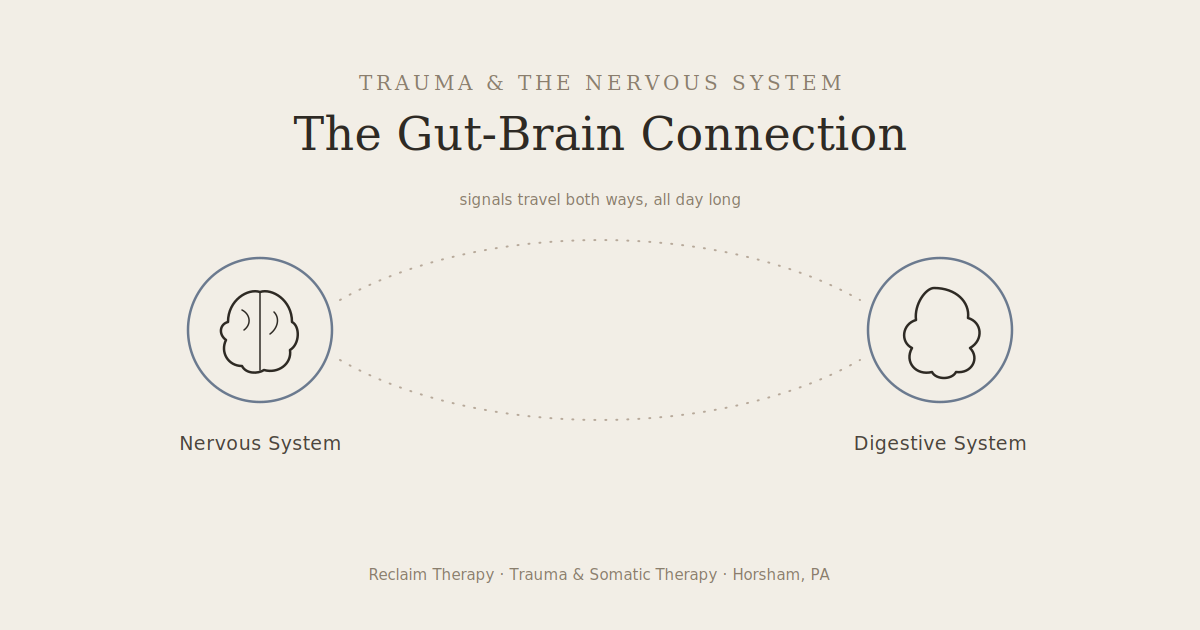
The gut-brain connection, often called the gut-brain axis, describes the ongoing communication between your brain and your gastrointestinal system. The gastrointestinal tract and brain communicate through the vagus nerve.
And this communication goes both ways.
Your brain sends information to your body, but your body also sends enormous amounts of sensory information back toward your brain. Your internal organs, including your digestive tract, are constantly providing information about what is happening inside you.
This is part of something called interoception, your ability to sense and interpret what is happening inside your body.
The enteric nervous system is sometimes called the second brain and contains over 100 million nerve cells.
Hunger is interoception.
Fullness is interoception.
Nausea, your heart pounding, butterflies in your stomach, needing to use the bathroom, noticing your breathing change, feeling shaky or realizing your stomach has tightened are all examples of internal sensations your nervous system is receiving and interpreting. The gut produces about 90% of the body's serotonin, which helps explain links between digestion, mood, and mental health.
Your gut isn't sitting downstairs minding its own business while your brain handles stress upstairs.
They are talking all day long, and when one part of that communication system changes, the other can send signals through the central nervous system in the gut and brain to respond.
How the Nervous System Affects Digestion
Think about what happens when you suddenly realize you forgot something important.
Maybe your stomach drops.
Or imagine getting a text from someone you have a complicated relationship with.
You haven't even opened it yet, and your body is already doing something.
Your chest tightens. Your heart rate changes. Your stomach clenches. Maybe you suddenly need to run to the bathroom.
That response is your nervous system is responding to information.
When your brain and body perceive threat, your autonomic nervous system helps organize a survival response. In an acute emergency, this is incredibly useful. Your body temporarily prioritizes survival over things that aren't as urgent in that particular moment, which can divert blood flow away from the gi tract and disrupt gut motility.
Digestion can change as part of that response. With ongoing stress, that can weaken the gut lining, raise inflammation, and interfere with nutrient absorption.
For someone without a significant trauma history, the nervous system may mobilize during a stressful situation and then gradually settle once the stressor has passed.
Complex trauma can make this more complicated.
When someone has spent years living with chronic stress, unpredictability, emotional neglect, abuse, attachment disruption, or other ongoing threats, the nervous system may become organized around anticipating and responding to danger. Trauma can involve persistent adaptations in how the body responds to both internal and external cues.
The original threat may be long gone, but the body can still become activated quickly.
And because digestion is part of that same system, your gut can get pulled into the conversation. Over time, trauma can contribute to increased intestinal permeability, chronic abdominal symptoms, and visceral hypersensitivity, which may show up as ongoing gut issues in certain situations.
Why Anxiety Can Cause Stomach Problems
If you've ever had a nervous stomach, you already have firsthand experience with the gut-brain connection. Anxiety can show up as nausea, stomach pain, changes in appetite, diarrhea, constipation, bloating, or that vague feeling that your stomach is just off.
Then something else can happen.
You notice the sensation.
Why does my stomach hurt?
Am I going to be sick?
Something feels wrong.
Now your brain has another possible threat to pay attention to, the sensation itself.
Internal sensations can become part of an anxiety feedback loop, and this is also part of the brain gut connection seen in functional gi disorders, especially when symptoms occur without an obvious physical cause and someone has learned to monitor their body closely for signs that something is wrong. The digestive tract provides a substantial amount of the sensory information involved in this internal body awareness.
Stress can create a gut sensation.
You notice the gut sensation.
Your brain interprets the sensation as potentially threatening.
Your nervous system becomes more activated.
And that activation may create even more uncomfortable sensations.
These gut problems can intensify anxiety or depression when symptoms repeatedly trigger symptoms and there is no obvious physical cause.
The symptoms are happening in your body.
Trauma Can Also Make It Harder to Feel Your Body
There's another side of the trauma and gut health conversation that gets talked about much less. Some trauma survivors notice everything happening inside their bodies. Others barely notice their bodies at all. And plenty of people move between the two.
You might not realize you're hungry until you're ravenous.
You might have difficulty recognizing fullness until you're painfully uncomfortable.
Maybe you know something feels bad in your stomach but can't tell whether you're anxious, hungry, nauseous, tense, or overwhelmed.
Or perhaps paying attention to anything happening inside your body makes you immediately uncomfortable.
This can be especially relevant for people with complex or developmental trauma. When internal experiences have historically been overwhelming, confusing, dismissed, or unsafe to express, disconnecting from the body can become protective. Trauma can affect how someone experiences and responds to bodily sensations, including sensations associated with the digestive system.
This is one reason trauma recovery isn't always about becoming more aware of your body as quickly as possible, sometimes the work is learning how to notice a little bit more without becoming overwhelmed.
Digestive Symptoms That May Get Worse During Stress
There isn't one specific set of "trauma digestive issues."
People may experience very different symptoms.
Periods of stress or nervous system activation can coincide with nausea, abdominal discomfort, changes in bowel habits, constipation, diarrhea, bloating, reflux, appetite changes, feeling full quickly, or changes in hunger and fullness cues.
Some people with irritable bowel syndrome also notice that their symptoms become significantly worse during periods of emotional stress, and some may also have gut microbiome changes, including shifts in gut bacteria and other bacteria that affect mood and mental health.
But none of these symptoms, by themselves, tell us that trauma is the cause. Your nervous system may be one piece of the puzzle without being the entire puzzle, and stress-related changes can contribute to gut problems rather than fully explain them.
Complex Trauma Is Different From Having a Stressful Week
There is a difference between "I have a big presentation tomorrow and my stomach is a mess," and spending your childhood constantly tracking whether a parent was angry, staying small so you didn't cause problems, suppressing your needs, bracing for conflict, or learning that it was safer to disconnect from what you felt.
Complex trauma isn't simply experiencing "a lot of stress."
It can shape how the nervous system develops and responds to internal and external cues.
If your early environment required you to be constantly alert to other people's moods, for example, your system got very good at noticing possible signs of threat.
If feeling or expressing your needs wasn't safe, disconnecting from internal sensations may have been useful.
If unpredictability was normal, staying prepared may have made sense.
These aren't conscious decisions a child sits down and makes.
They're adaptations.
And years later, those adaptations can continue showing up in the body even when your current environment is very different from the one in which they developed.
Trauma, Gut Health, and Disordered Eating
This connection gets even more complicated when someone has a history of disordered eating.
Because imagine trying to "listen to your body" when the signals coming from your body have been difficult to access or interpret for years.
Hunger might feel like anxiety.
Fullness might feel threatening.
Stress may eliminate your appetite completely.
Eating may temporarily soothe an activated nervous system.
GI discomfort might make eating genuinely uncomfortable.
And then diet culture swoops in with approximately 4,732 rules about what you should eliminate to "heal your gut."
When trauma and food restriction overlap, irregular eating can worsen gut issues and digestive distress during high-alert states, while regular meals may help restore more balance.
For someone vulnerable to disordered eating, increasingly restrictive gut-health protocols can create their own problems. Eliminating more and more foods may increase anxiety around eating, reinforce rigid food rules, make adequate nourishment harder, or further complicate the process of learning what your body is actually communicating.
There are absolutely medical situations where dietary changes are appropriate. That is different from assuming restriction is always the path toward better gut health.
More restriction is not automatically better gut care.
This is also where trauma and disordered eating tend to overlap in ways that are easy to miss. A nervous system that has spent years disconnected from its own hunger and fullness cues is not going to suddenly become fluent in intuitive eating because someone read a blog post about gut health. If you recognize yourself in this section more than any other, that overlap is worth exploring directly with a therapist who understands both trauma and eating disorders, rather than trying to solve it through another round of elimination diets.
Can Healing Trauma Improve Digestive Problems?
Trauma therapy is not a treatment for every digestive disorder.
You cannot regulate your nervous system hard enough to cure every GI condition, and anyone promising that you can is oversimplifying a very complicated body. But, if chronic nervous system activation is contributing to your symptoms, working with that activation may become one piece of a larger treatment plan.
That might include trauma therapy, medical care, nutritional support, improving sleep, working with a gastroenterologist, addressing anxiety, improving emotional regulation to support gut health and overall physical health, developing more awareness of internal sensations, or slowly building your capacity to stay present with your body.
For some people, trauma work may involve EMDR. For others, somatic therapy or parts work may be helpful. Therapies such as EMDR or breathwork can help strengthen vagal tone through the vagus nerve, which plays a central role in digestive function and restoring more balance. And for people with complex trauma, this work often needs to happen gradually.
Paying attention to your body isn't automatically regulating. For someone who learned to disconnect from bodily sensations because those sensations were overwhelming, being told to close your eyes and "feel into your body" can actually increase distress.
Trauma-informed care takes that seriously. Resolving emotional triggers may help reduce chronic cortisol, support the gut lining, and lower inflammation.
In complex trauma treatment, even briefly noticing a sensation in the body and then returning attention to something more neutral can help someone build capacity for body awareness without pushing past what their nervous system can tolerate.
You don't have to force yourself into connection with your body, sometimes connection is rebuilt a few seconds at a time.
When Digestive Symptoms Need Medical Attention
One of the dangers of talking about nervous system gut health online is that physical symptoms can get attributed to trauma too quickly.
Please don't let your trauma history become a reason that you or someone else dismisses what's happening physically.
New, persistent, severe, or changing digestive symptoms deserve medical attention. Symptoms such as blood in the stool, persistent vomiting, significant or unexplained weight changes, severe abdominal pain, difficulty swallowing, fever, anemia, or other concerning changes should be discussed with an appropriate medical provider, and conditions like inflammatory bowel disease should not be assumed to be stress alone.
You can investigate what is happening medically and explore the role of your nervous system. Some functional gi disorders cause real symptoms even when there is no obvious physical cause, which is why both perspectives matter.
Those aren't competing approaches. Often, good care means looking at more than one part of the picture.
Your Gut Isn't Separate From Your Trauma Recovery
Maybe you've spent years feeling frustrated with your body because it seems overly sensitive, unpredictable, or impossible to understand.
Your stomach reacts before you've even realized you're anxious.
Your appetite disappears when you're overwhelmed.
You feel sick before conflict.
Or your digestive symptoms seem to flare when the rest of your life gets harder.
None of that gives us a diagnosis. And it doesn't mean every digestive symptom can be traced back to trauma.
But it does give us information.
Your digestive system is part of the same body that learned how to survive everything you've been through.
Sleep, regular nourishment, and support for the gut-brain axis also shape recovery and overall well being. High-fiber foods and fermented foods can help nourish beneficial bacteria and gut microbes, while sleep deprivation can disrupt gut microbiome composition.
Understanding the connection between trauma and gut health gives us another way to get curious about what your body may be communicating, without blaming it, fighting it, or immediately assuming the answer is another restrictive diet.
Sometimes recovery involves learning that the body you've spent years frustrated with has been communicating with you all along.
Trauma Therapy Near Me Can Help You Heal From Trauma and Childhood Trauma

If you're looking for support with complex trauma, nervous system dysregulation, body image, or disordered eating, Reclaim Therapy offers trauma therapy in Horsham and Montgomery County, PA, as well as virtual therapy throughout Pennsylvania.
Our therapists integrate approaches including EMDR therapy and somatic trauma therapy to help you understand not only what happened to you, but how your experiences may still be showing up in your nervous system, relationships, and connection with your body.
Schedule a consultation to get started.
🧡,

Frequently Asked Questions
Can trauma really cause digestive problems?
Trauma can be one contributing factor to digestive symptoms because the nervous system and digestive system are in constant communication. This does not mean every digestive symptom is caused by trauma. Many digestive symptoms have medical causes and deserve appropriate evaluation.
What is the gut-brain connection?
The gut-brain connection, also called the gut-brain axis, describes the ongoing two-way communication between the brain and the digestive system. The vagus nerve helps the gut and brain communicate. The enteric nervous system in the gastrointestinal tract is sometimes called the second brain. Your gut sends sensory information to your brain, and your nervous system can influence how your digestive system functions.
Why does anxiety cause stomach problems?
Anxiety activates the nervous system, which can alter gut motility and trigger symptoms such as nausea, stomach pain, diarrhea, constipation, or changes in appetite. Noticing those sensations can sometimes create a feedback loop where the body becomes more activated in response to the sensation itself.
Can healing trauma improve digestive issues?
Trauma therapy is not a treatment for every digestive disorder, but if chronic nervous system activation is contributing to someone's symptoms, addressing that activation may be one part of a larger treatment plan that also includes appropriate medical care.
Gut-directed therapies may also help some people with irritable bowel syndrome or related gut issues when used alongside appropriate medical care.
When should digestive symptoms be evaluated by a doctor?
New, persistent, severe, or changing digestive symptoms should always be evaluated medically. This includes blood in the stool, persistent vomiting, unexplained weight changes, severe abdominal pain, difficulty swallowing, fever, or anemia.